There is perhaps only one equation in all
of physics that almost everyone knows- and that equation is E equals m c squared. When you get down to it, it’s actually pretty amazing that this particular equation is so well known. After all, it makes a pretty weird assertion, which is that energy is the same as matter. I mean- that’s what that equal sign says. So, given that the equation is so familiar, it’s probably worth asking the question:
Is it right?
And the answer will probably shock you.It’s no- or, perhaps more accurately- the equation is a special case. In order to use it properly you need to know more. And you shouldn’t think that I’m saying something controversial here. Anyone who has a thorough grip of special relativity will agree. The problem is not with the theory, but rather simply how the well understood theory of relativity is portrayed in popular culture.
So, if E equals m c squared is wrong, what’s
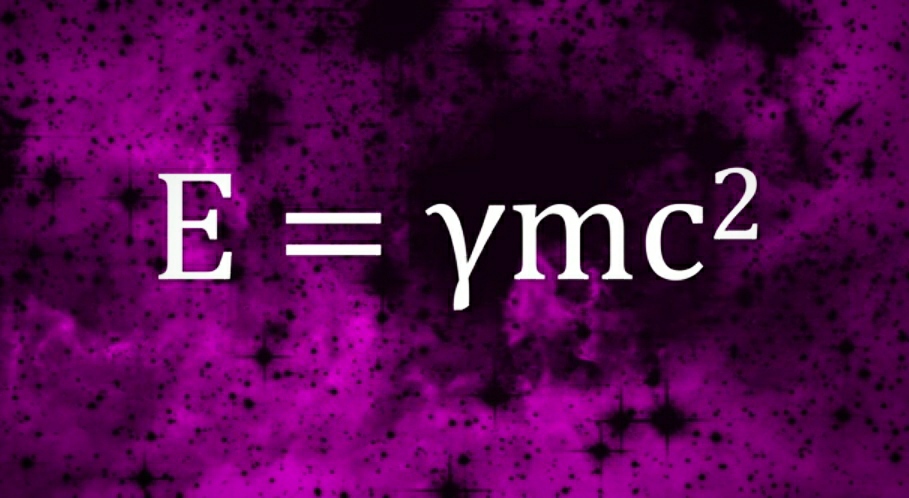
right? It turns out that there are two more accurate, but similar equations. Let me tell you about both of them. The first one looks pretty similar. It is E equals gamma times m times c squared. Gamma is a term that is ubiquitous in relativity. It is defined as one over the square root of the quantity one minus v squared divided by c squared. V is an object’s velocity relative to you and c is the speed of light.
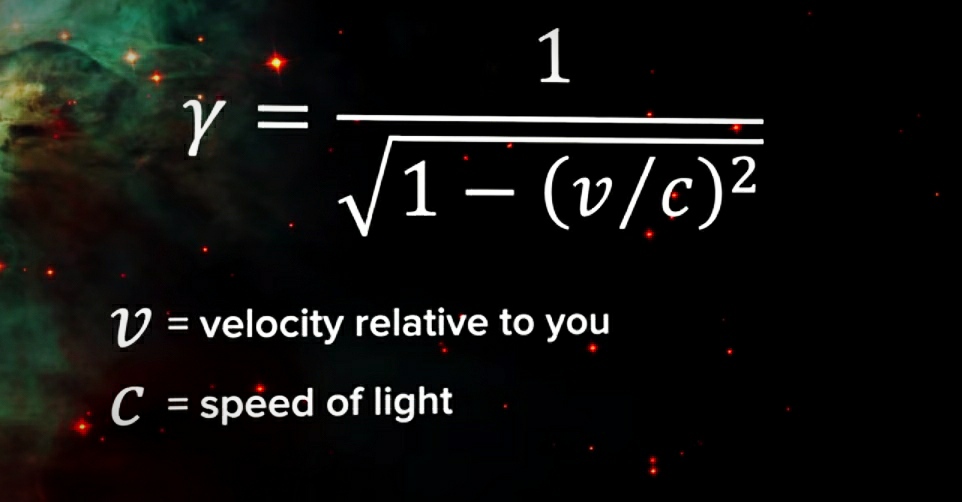
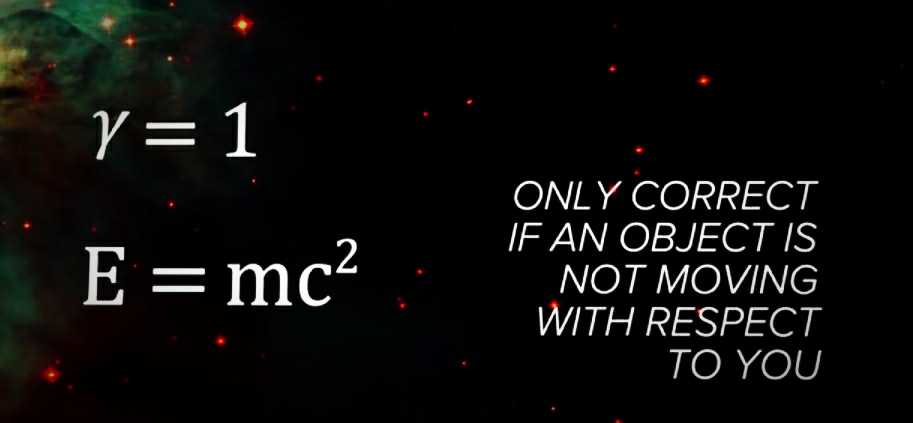
If v is zero, then gamma is just one. So that’s your first insight- E equals m c squared is only correct if an object isn’t moving with respect to you.
And, as an object’s velocity increases towards c, gamma gets higher and higher and the energy of the object increases.
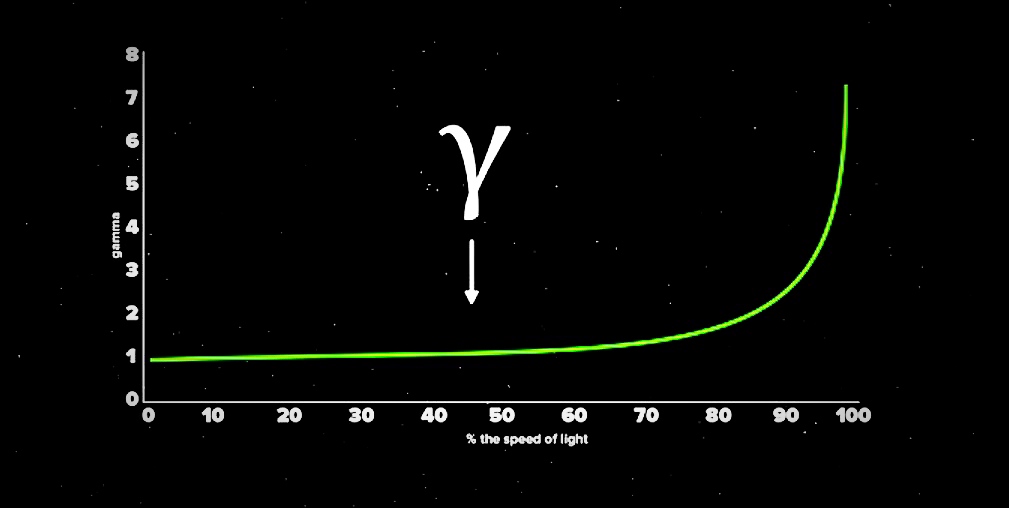
Note that the mass doesn’t increase, but the energy does. This is a particularly important to realize, because I don’t know how many times I hear that since energy and mass are the same, then a highly energetic object is also a massive one, at least not in the way most of these people mean. It’s just not true.
So get that misconception out of your head.
There’s another aspect of this equation
that people get at least kinda-sorta wrong.
If you keep the energy constant, but reduce
the mass of the object, then the gamma must increase. And if you take the mass all the way down to zero, then the velocity must become the speed of light, since gamma must become infinite. This is because you start getting into mathematical tricks, where infinity times zero equals a constant. So that kind of works in calculus, but invoking infinities in physics is usually a very bad idea.
Thus this equation doesn’t really apply
for photons, which are massless particles
of light. Indeed- and this is an important
point- this equation only applies for particles with mass and for speeds below the speed of light.
Now there is another equation that applies universally for both particles with and without mass, and that equation is here. It is E squared equals p times c, all squared, plus m c squared, again all squared.
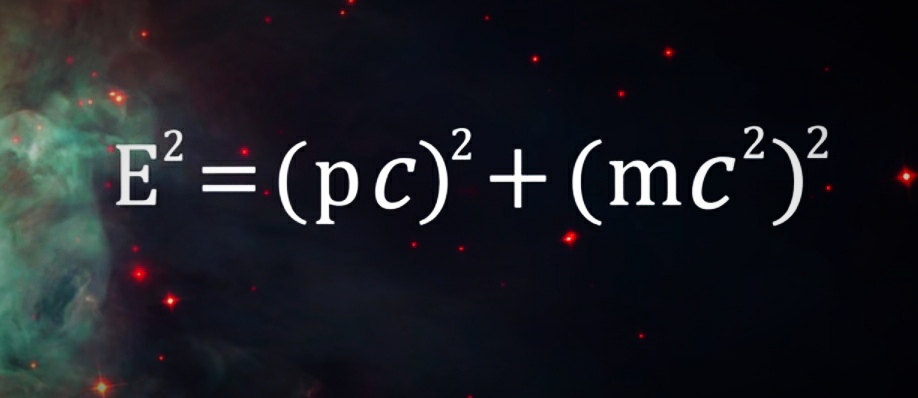
The meaning of the symbols is e is energy, m is mass- what some people call the rest mass, but is really the only value for mass- c is the speed of light, and p is the momentum, which is a measure of the motion of a particle. Let’s see what happens in the case of a particle not moving, which means setting the momentum to zero. You get the familiar equation E equals m c squared. Now, let’s set the mass of a particle to zero, which, of course, describes a photon. We see here that the equation turns into E equals p times c, which is the correct relationship between the energy and momentum of a photon. That’s pretty snazzy too.
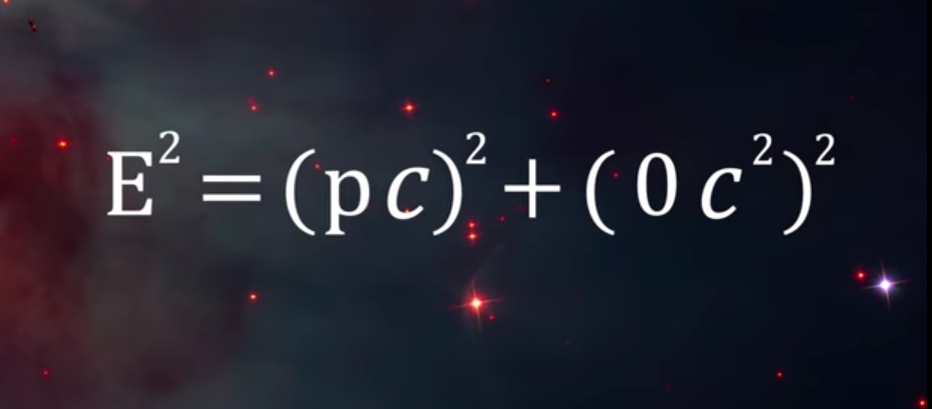
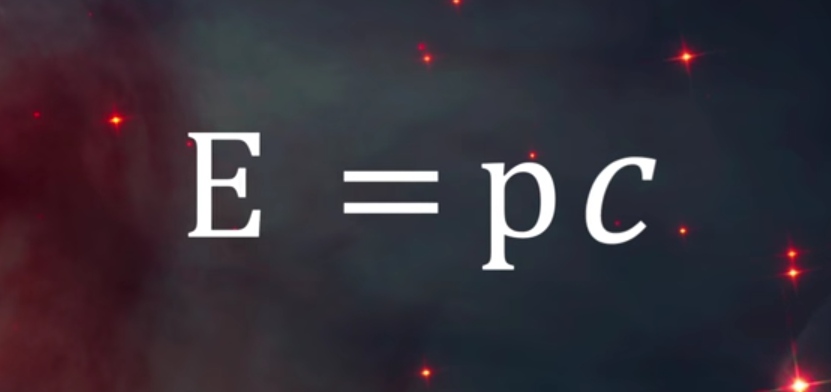
Further, this equation demonstrates precisely why using the E equals m c squared equation for photons is just simply silly. If you do that, small children will laugh at you. So don’t do that. By the way, there’s one additional point that I’d like to make. Let’s go back to the other equation relating energy to mass–the E equals gamma m c squared one. Let’s talk about the physical meaning of gamma. Remember that m c squared is the energy of a particle at rest. In contrast, E is its energy while it’s moving. Thus, gamma is simply the ratio of the total energy of a particle to its energy when it isn’t moving.
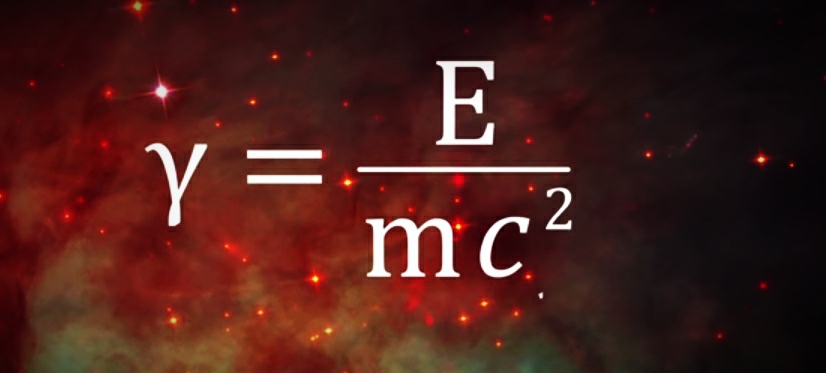
Since particle physics experiments often measure a particle’s energy, I find this particular physical implication of gamma to be the most useful
So that’s it! Einstein’s most famous equation
is true, but it’s actually a special case of equations that apply more generally. And
now, you know how to do it the right way.
Relativity is really pretty mind blowing, no doubt about that. And it’s misused so often. I hope that this article helped you out.
So, see you next time and remember – physics is everything!
 Physics of Everything
Leave a comment